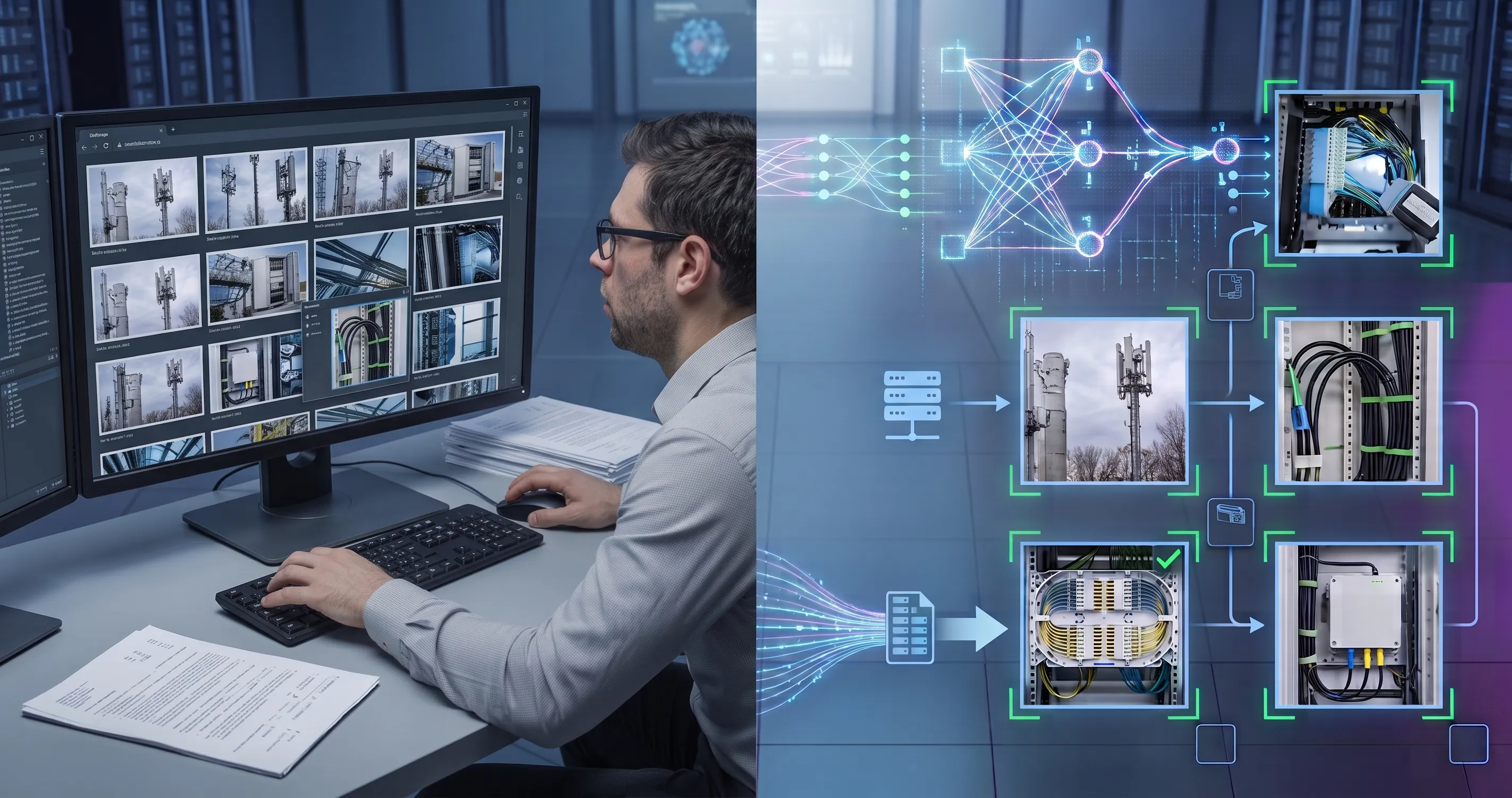
In the tech world, there is a common belief that the higher the algorithm’s accuracy, the better. However, from a business perspective, chasing “fractions of a percent” in image recognition precision can be the shortest path to burning through your budget.
As a Business Owner, you face a dilemma: should you choose the most accurate solution or the fastest one? The answer is: choose the one that best scales your profit.
1. The Currency of Milliseconds: Why Speed Matters
In Computer Vision, time isn’t just a convenience—it’s your business’s throughput. If you are deploying a video analysis system on a production line that churns out 10 products per second, your model must make a decision in less than 100 ms.
- YOLO-type models (You Only Look Once): These are the “sprinters” of the AI world. They are optimized for real-time performance. They allow for image analysis directly on inexpensive devices (Edge Computing), eliminating the costs of sending gigabytes of data to the cloud.
- Applications: Logistics, crowd counting, security systems, high-speed quality control.
2. The Cost of Precision: When is 99% Too Much?
Imagine two scenarios. In the first, a system counts vacant parking spaces. If it misses one car (98% accuracy), nothing happens. In the second, an algorithm analyzes X-rays for cancer. Here, a 2% error rate is a catastrophe.
Ultra-high precision models, such as Vision Transformers (ViT), require massive computational power.
- High Precision = Expensive Infrastructure: Running the most accurate models requires servers with powerful GPUs. The cost of maintaining such a system in the cloud can swallow the margin generated by the innovation itself.
- The Golden Rule: Look for the Minimum Viable Accuracy (MVA) point. This is the lowest level of accuracy that solves your business problem while maintaining the lowest operational costs.
3. Cloud vs. Edge: Where Does the Heart of Your System Beat?
The choice between a fast or an accurate model determines your IT architecture and your future invoices.
| Feature | Fast Models (Edge) | Heavy Models (Cloud) |
|---|---|---|
| Operational Cost | Low (one-time hardware purchase) | High (monthly power subscription) |
| Latency | Minimal (local processing) | Dependent on internet speed |
| Data Privacy | High (data never leaves the site) | Lower (data travels through the web) |
| Scalability | Easy (add another device) | Costly (requires more cloud power) |
4. Three Questions You Must Ask Your IT Team
Before you sign off on a budget for Computer Vision implementation, make sure your team isn’t “using a sledgehammer to crack a nut.” Ask them:
- What is the cost per inference (operation)? How much does it actually cost us to analyze one image or one minute of footage?
- Where is the bottleneck? Is it the processor, or perhaps the data transfer speed that limits us?
- Can we use quantization? This is a technique that “slims down” a model so it runs 3x faster on cheaper hardware with a loss of only about 1% in accuracy.