Paradoxically, the more work-improving tools we incorporate into daily operations, the more chaotic the company’s actions become.
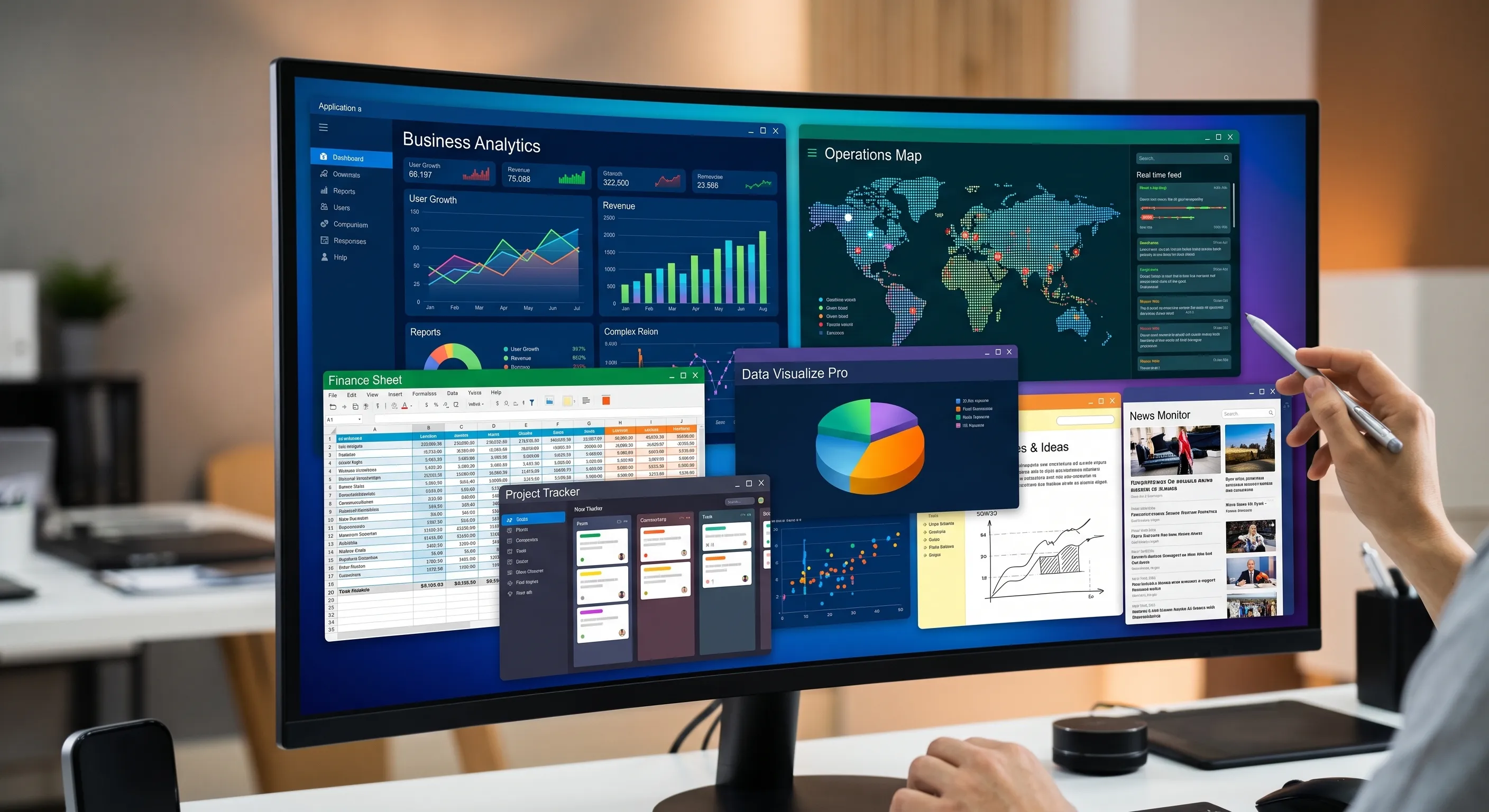
CRM collects customer contacts. ERP records transactions and costs. Jira knows how many tasks the team has completed. Google Drive is bursting at the seams, emails flood us like an avalanche, and every meeting also means “minutes” or an automated transcript. We suffer from data overload. Moreover, we are unable to use it properly.
Increasingly, the collected data does not influence better decision-making at all. Information is scattered, collected without a clear purpose, or turned into reports that lead to nothing. Introducing AI into a chaotic process will be of little use, and might even… harm, generating even more chaos.
Why do we actually collect data?
“When I see a new metric in a company, my first question is: ‘What decisions do you make based on it?’. If the answer is ‘none’, I ask: ‘Then why do you collect it?’” - says Paweł Feliński, Head of Delivery at Primotly, formerly a management consultant. - “In lean management language, tracking a metric that does not affect any action is a waste.”
Some companies do not use data, some do it wrong. The average and the median can lead to different conclusions. A drop in website traffic shows a change, but it does not tell whether to increase the advertising budget, improve SEO, change content, or account for seasonality. It is easy to confuse a single indicator with proof. Numbers also cannot replace context, which is not saved in the system.
It didn’t end with a report. The company reviewed and re-segmented clients, decided to phase out one cooperation, and renegotiate rates in others. Profitability analysis became a permanent element of management at the human, project, and client levels. Data gained value when it changed decisions.
Process first, AI later
Clients rarely say: “We have our data organized and we know what we want to do with it.” More often: “We want AI” or “We don’t have any data.” Only a situation assessment reveals that systems are already recording something, but the information is scattered or no one knows what it is for.
The first question should therefore not be about the model. It should be: what for? What does the company want to find out and what decision does it want to make thanks to this knowledge? Later, you can check whether the right data exists, whether it is reliable, and whether AI is actually needed for the solution. Sometimes a classic algorithm, simple automation, or process improvement is enough.
“I wouldn’t give a model access to a random set of company data with the command: ‘Do something with this and draw conclusions’” - says Paweł. First, you need to establish what information we collect, where it is stored, how often it is updated, who looks at it, and what they are responsible for. Only a functioning process can be reasonably automated.
AI can pull data from dozens of tools, organize it, look for dependencies, and propose interpretations. It is still a source of information, not a decision-maker. Like in a weather forecast: models process data, but the result is interpreted by a meteorologist who understands their limitations.
AI exactly where it’s needed
This approach can be seen in the Primotly application for technical installation control. Contractors document their work with photos of devices and connections. On the client’s side, someone had to manually check thousands of photos: is the right element in them, are the wires connected properly, and does the installation meet the requirements.
Primotly built a computer vision system, a solution that analyzes image content. They did not create one massive model trying to recognize everything. A set of specialized models was developed along with a fast routing layer directing the photo only to the necessary modules. If it is known that three out of twenty types of devices were used on the construction site, the system does not run the remaining seventeen analyses.
Combining machine learning with simple, deterministic rules shortened the solution’s preparation, accelerated its operation, and reduced the client’s costs. Technological maturity is not about using AI everywhere, but about matching it to the part of the problem where it provides an advantage.
Research and development (R&D) work is needed beforehand. The model learns on photos, and these can be sharp or blurred, taken in different lighting and from different perspectives. For one object, the client has thousands of examples, for another, just a few. The dataset needs to be evaluated, cleaned, and sometimes expanded or supplemented synthetically. R&D must answer early on whether the expected quality is achievable and what is needed for the product to work beyond a demonstration.
Behavior is sometimes more valuable than declarations
Another area of Primotly’s specialization is solutions for the research industry. One of the products, plugged into the client’s survey system, allowed testing different versions of an online store. Alongside survey responses, it recorded the respondent’s behavior: which product they saw, how many times they returned to it, whether they read the description, and when they added the item to the cart.
“When we ask a person what they would do in a given situation, we get a declaration. When we observe actual action, we get a different kind of data” - says Maciek Kemnitz, Primotly’s CEO. - “Behavior is harder to fake. It also helps filter out traffic that does not reflect true user interest.”
Survey questions do not lose their meaning. However, combining declarations with behavior provides a fuller picture and a better basis for decisions about product presentation or service development.
The company has information, but lacks a single memory
Primotly recognized a similar problem internally. The company used email, a drive, a communicator, CRM, and systems for invoicing and tasks. Each tool contained a piece of knowledge. Many arrangements remained in conversations and meetings in which not all interested parties participated.
The answer became an internally developed product based on generative AI, but independent of a single model provider. It combines information from various sources, including meeting transcripts, and shares it according to permissions. After all, a single corporate memory cannot mean that every employee sees everything.
The accumulated context also allows asking the model about project risks, the account manager’s next actions, or opportunities visible across the entire project portfolio. The result is not a decision. It is an additional voice that can draw a human’s attention to an overlooked dependency.
The tool does not take responsibility
Automation has less obvious consequences. At Primotly, some people stopped taking notes during meetings, relying on transcripts. This allows focusing on the interlocutor, but creates a risk. During one two-hour meeting, the tool stopped working. On both sides, almost no one was taking notes. The arrangements were only partially recreated because two people were still keeping their own notes.
Maciek points to the limited context capacity. In a long task, the model might lose the initial goal or skip important information. An imprecise command can lead to a convincing but incorrect answer. AI tools are therefore not ready-made business products. You need to design sources, rules, quality control, permissions, and the human’s place in the process.
A product starts with a problem, not a feature list
The client doesn’t need to know the technology. That is exactly why they look for a technological partner. However, someone must consciously manage the product - understand the users, the value of the solution, the experience of using it, and the direction of development. These competencies can be on the client’s side or Primotly’s.
The problem arises when a company does not want to talk about the goal and the users, but hands over a closed list of features. Sometimes a mature product team stands behind it. More often, it is just a set of untested assumptions. That is why product discovery is important: a shared understanding of the problem before starting expensive development.
This distinguishes product creation from supplying additional programmers. Body leasing is appropriate when the client has their own process, but lacks competencies or people. When they need a solution to a problem and responsibility for the result, custom product development is more appropriate. Then the success of the product becomes a shared matter for the client and the technological partner.
From information to decision
The amount of information in companies exceeds the capabilities of a human, a team, and often a department. You can respond with more dashboards. Or you can build systems that organize data, preserve context, and provide the right information to the decision-maker.
Not every company needs AI in every process. Every company should know what decisions they want to make better and faster. It is worth starting the conversation about data, technology, and product with this question. After all, the result is not supposed to be more reports or just “AI implementation,” but better-informed decisions - still made by people.
FAQ
Why do most companies fail to derive actionable value from their data?
Companies frequently suffer from data overload caused by disconnected software tools (CRM, ERP, Jira, cloud drives) collecting information without clear operational goals.
- Lack of Actionability: Tracking metrics that do not drive specific business decisions results in operational waste under Lean Management principles.
- Context Deprivation: Raw metrics show what changed (e.g., a drop in web traffic), but fail to explain why or dictate appropriate action without qualitative context.
- Siloed Systems: Unintegrated data blocks visibility into fundamental metrics, such as true project-level profitability.
Why must process optimization precede AI implementation?
Introducing AI into an unorganized workflow amplifies chaos rather than resolving it.
- Governance First: Before training or querying models, organizations must establish data storage locations, update frequencies, access permissions, and accountability.
- Alternative Solutions: Deterministic algorithms, simple automation, or manual process redesigns are often more cost-effective than machine learning models.
- Tool vs. Decision-Maker: AI aggregates context and highlights dependencies, but human oversight remains essential for final strategic decisions.
How does Primotly structure AI models to reduce client implementation costs?
Primotly avoids monolithic AI models by deploying specialized computer vision systems paired with intelligent routing layers.
- Targeted Processing: System architecture directs inputs (e.g., site inspection photos) strictly to the relevant analysis modules, reducing unnecessary computational load.
- Hybrid Logic: Combining machine learning with simple deterministic rules accelerates execution speed and lowers infrastructure expenses.
- Early R&D: Datasets are evaluated, cleaned, and synthetically augmented early in development to ensure performance in unpredictable real-world conditions.
What is the advantage of tracking user behavior over collecting survey responses?
- Declarative Data (Surveys): Captures what users claim they will do, which is often biased or inaccurate.
- Behavioral Data (Observed Actions): Records actual interactions—such as navigation paths, cart updates, and dwell time—providing a clearer signal of user intent and filtering out disingenuous activity.
How can Generative AI centralize corporate memory across fragmented applications?
Custom GenAI layers integrate disjointed communication channels (email, CRM, task boards, meeting transcripts) into a permission-aware knowledge base.
- Standardized Context: Automated meeting summaries and action items allow team members to track decisions without reviewing raw recordings.
- Portfolio Insights: Querying accumulated context helps managers identify cross-project risks and missed opportunities.
- Human Responsibility: Because models suffer from context window limits and lack real-world judgment, accountability for final decisions remains strictly with human operators.
What is the difference between custom product development and body leasing?
- Custom Product Development: Addresses root business problems through Product Discovery, shared risk, and end-to-end responsibility for the solution’s success.
- Body Leasing (Staff Augmentation): Supplies extra engineering capacity to implement a client’s fixed list of technical specifications within an established internal process.